The last answer
Villafranca, 14 December 1960. The control tower orders him to eject. The pilot is twenty-four and he is Pietro's uncle. He answers with a single sentence, which the newspaper will print in the following days and his mother, twenty years later, will put into verse.
Pietro Iannelli · 22 October 2026
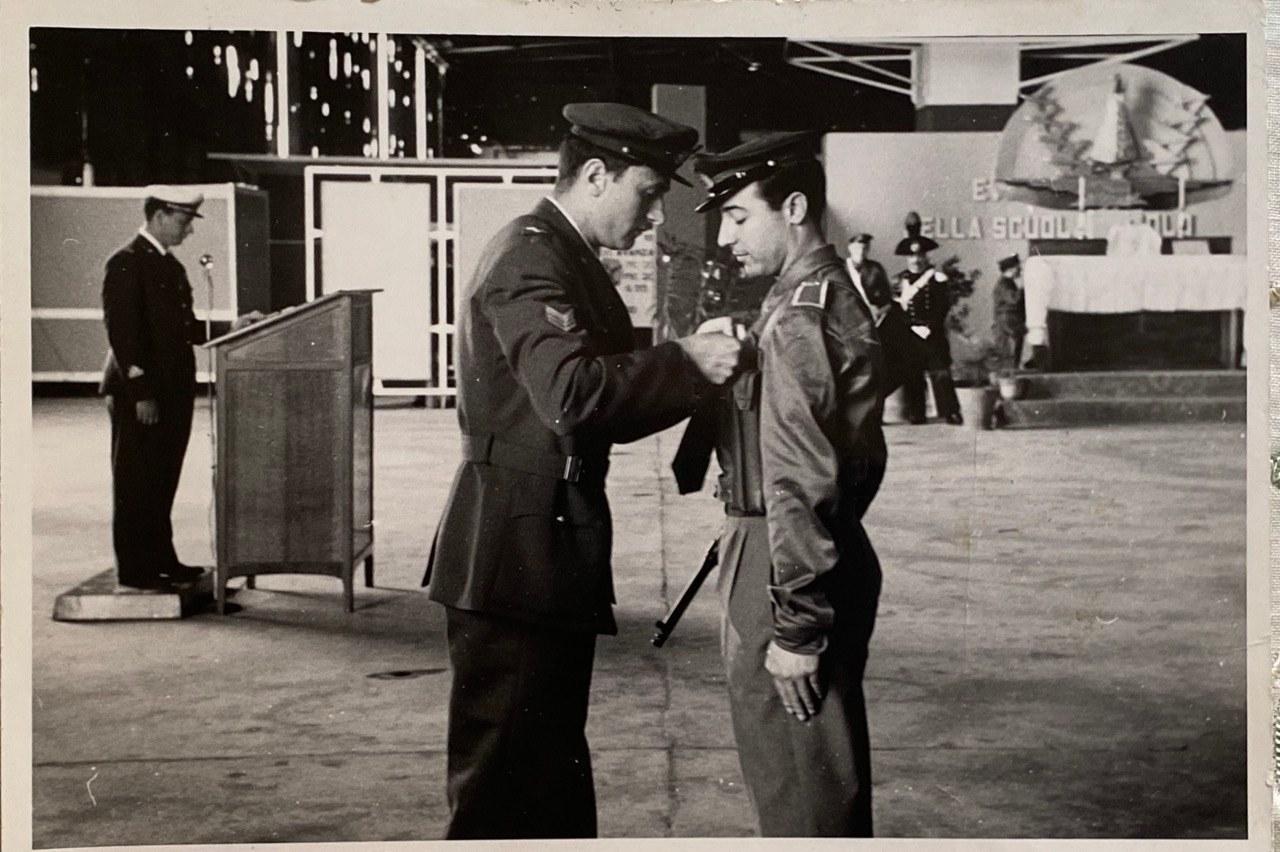
In Tempio, in those December days of 1960, everything in the Lutzu house is ready for the Christmas sweets. Pietruccia makes them for her children, her grandchildren and her friends, and she waits for her boy, Tino: her only son, the brother of Bastiana, Pietro's mother. In two weeks he will turn twenty-five.
On Wednesday the 14th, at a quarter to twelve, Tino is flying over Villafranca di Verona in his jet. Something breaks. He calls the control tower, and the tower gives the order: abandon the aircraft.
Tino answers with four words.
“The name I gave you”
He was born on 28 December 1935, after three sisters. Before him, a little brother and a little sister had already died in the family. His father, Giacomo Lutzu, a merchant, chose to call him Buondestino, “good destiny”: it was wartime, and that name was meant to help him through the tragic moments. His second name was Innocente, because 28 December is the feast of the Holy Innocents.
At home they called him Tino. In Tempio people remember him on his motorbike, for his stunts, and for the bet to snatch the cigarette from a friend's mouth while riding full speed through Piazza Gallura.
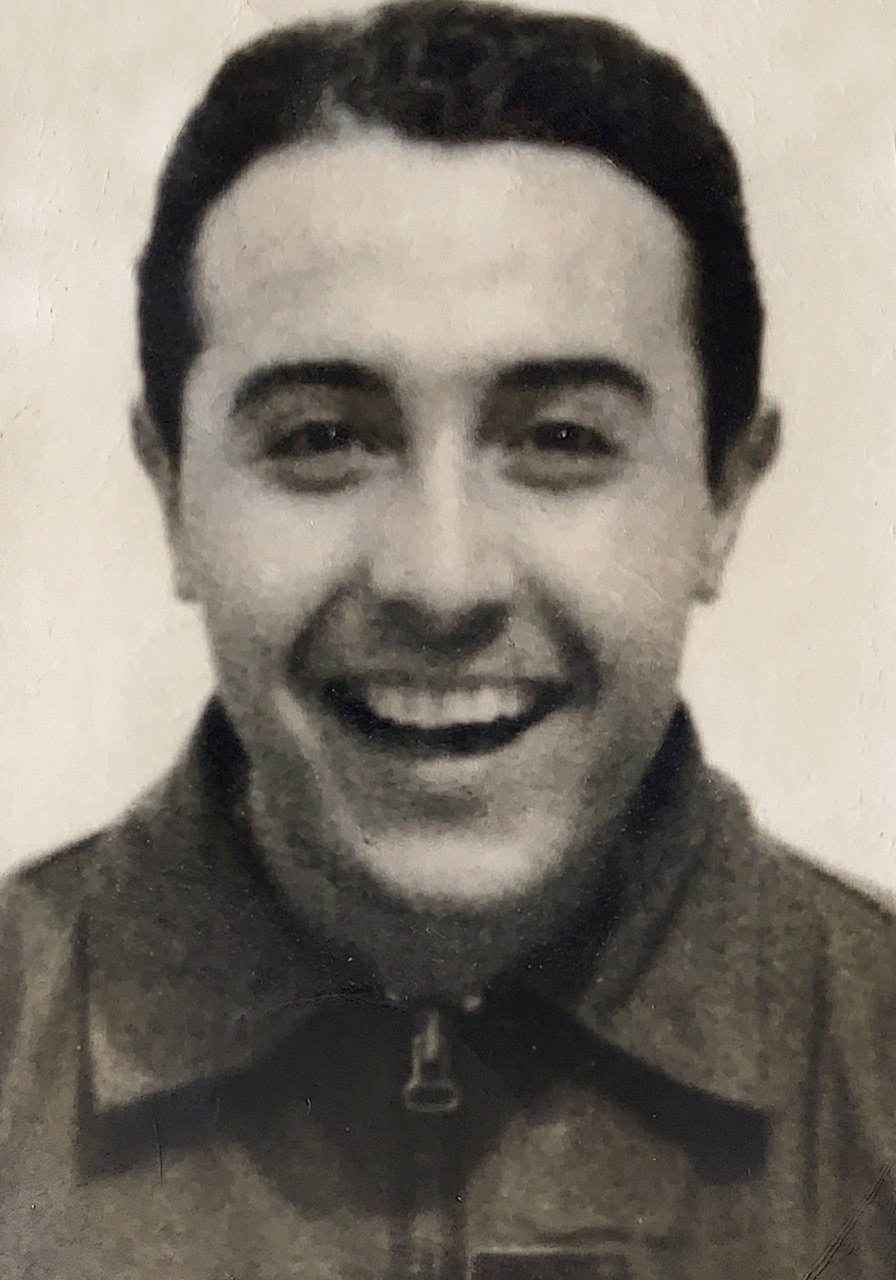
In 1959 he leaves university and joins the Air Force. When he leaves for training, his father walks him to the bus and, hugging him, tells him: “May the name I gave you bring you luck.”
Lecce, 29 June 1960
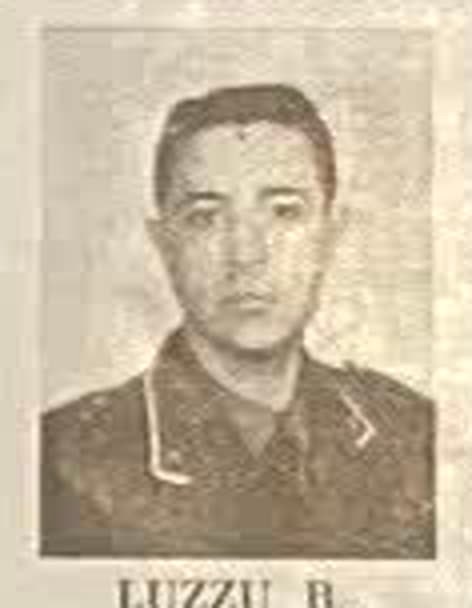
At the Lecce flying school, the 34th course of officer cadet pilots ends with the presentation of the pilot's wings. On the portrait page of the course booklet, among the boys in uniform, there he is: “LUZZU B.”.
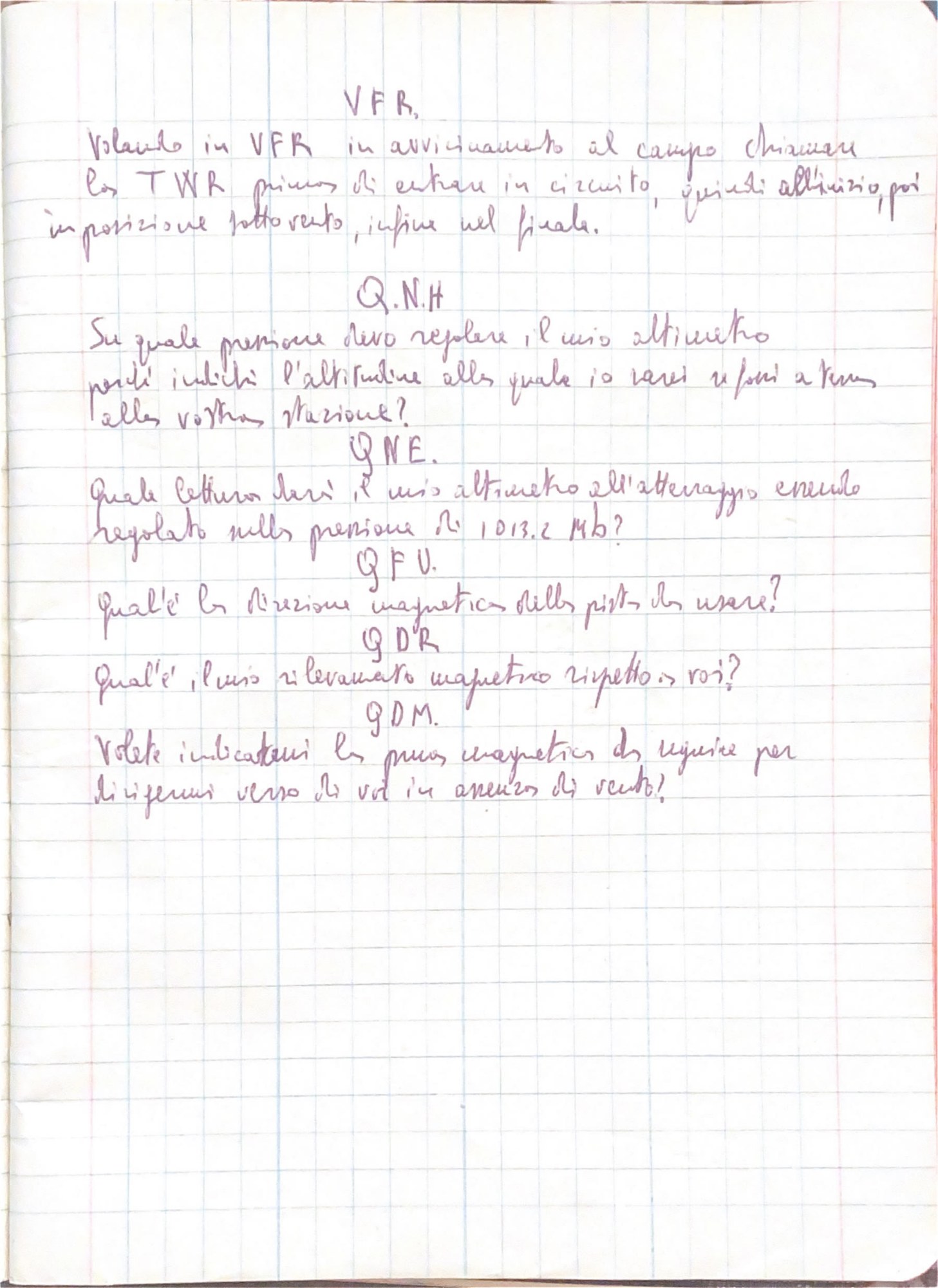
In his lesson notebook he copied a rule by hand: “Flying VFR on approach to the airfield, call the TWR before entering the circuit.” The TWR is the control tower.
Eight hundred an hour
That morning, the Sardinian newspaper writes, Tino is on a training flight when the engine fails and the aircraft loses height. He has time to call the tower. The instructor immediately orders him to abandon the aircraft. But Tino has looked down: in his path there is a cluster of houses. The plane is flying at about eight hundred kilometres an hour, closer and closer to the village.
“The tower was still shouting the order to abandon the aircraft,” the newspaper writes. “‘Un momento, non posso’ – ‘One moment, I can't’: those were the pilot's last words.”
Just one moment, the newspaper goes on, which he used to steer the plane, in a wide turn, away from the built-up area. When he triggers the ejection, the plane is too low. The parachute does not even have time to open.
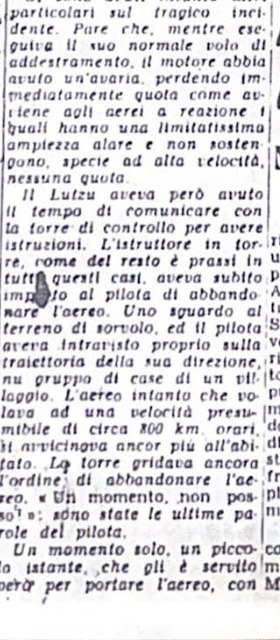
La Stampa, the same day, says where the plane came down: in a clearing about forty metres wide, on the outskirts of Villafranca.
The brother-in-law, Dr Iannelli
The news reaches Tempio in the late afternoon. His father is in San Francesco d'Aglientu on business; some friends go to fetch him and tell him only of an accident. They tell his mother, who is unwell, the same. The father, the mother, his sister Bastiana and “the brother-in-law Dr Iannelli” reach the quay at Olbia when the ship's gangway has already been raised. They are let on board only thanks to the harbour master.
The brother-in-law is Raffaele Iannelli, Bastiana's husband: Pietro's father, Andrea's grandfather. They set off convinced they will find Tino in hospital.
Only when they got there did they learn that he was dead.
All of Tempio
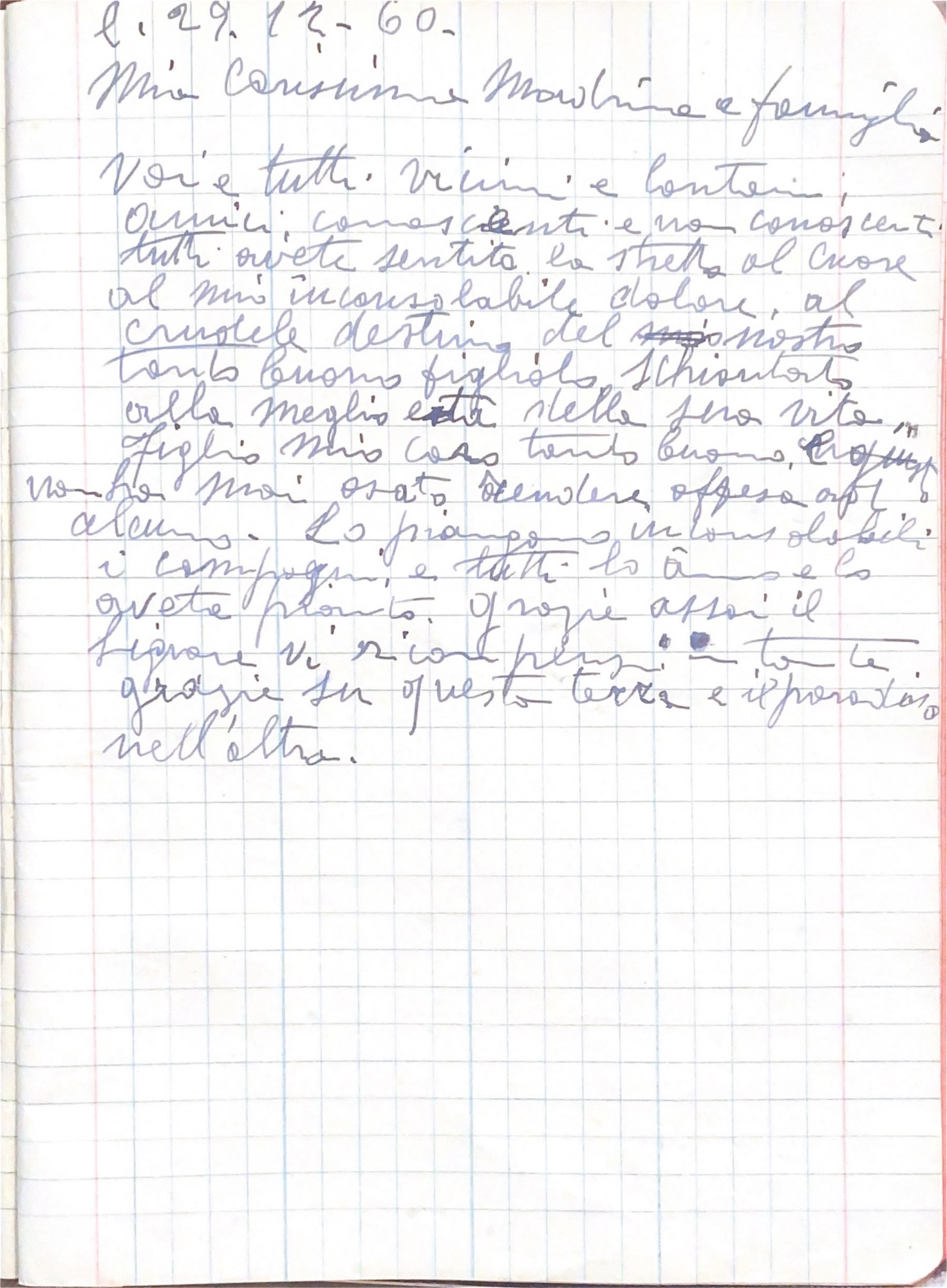
The funeral is held in Tempio, paid for by the town. The newspaper writes of an enormous crowd along the procession. The coffin is carried on the shoulders of his fellow officers, all the way to the church. On 29 December Pietruccia writes a letter of thanks to a friend.
…to the cruel fate of our so very good son, struck down in the best years of his life.
Pietruccia Mannoni, letter of 29 December 1960
His father went to the cemetery every day until he died, three years later, on 8 August 1963.
Twenty years later
Around 1980 Pietruccia, by now elderly, starts writing poems in Gallurese. One is for him, “A mio figlio” (To my son). “Lu me cori è tantu volti / chi pari di petra vattu”: my heart is so strong it seems made of stone, to bear so much grief. “Abali so' gia vint'anni / di chiddu crudeli dannu”: it is already twenty years since that cruel loss.
And in the poem there are the same words as in the newspaper.
Da la torre di cuntrollu / l'oldini era di ittassi / l'ultima risposta vusi / Un momento ora non posso.
Pietruccia Mannoni, “A mio figlio”, around 1980: “From the control tower the order was to jump; the last answer was: one moment, now I can't” (our translation)
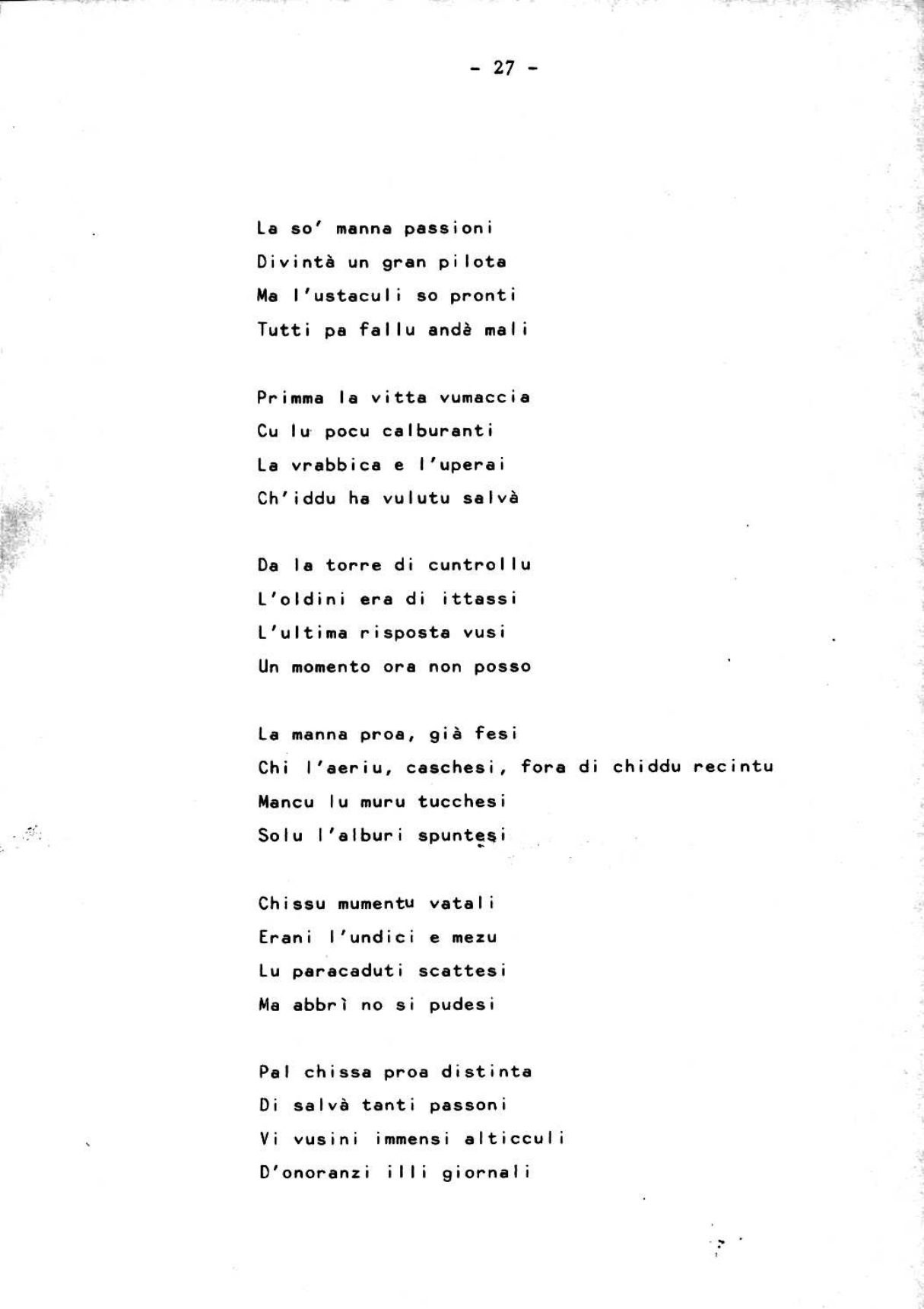
But the mother also sees what the newspaper did not write. The newspaper speaks of houses. She names something else: “la vrabbica e l'uperai / ch'iddu ha vulutu salvà”, the factory and the workers he wanted to save. And she adds a detail only a mother would look for: the plane fell outside the fence, “mancu lu muru tucchesi, solu l'alburi spuntesi”. It did not even touch the wall. It only clipped the trees.
What remains
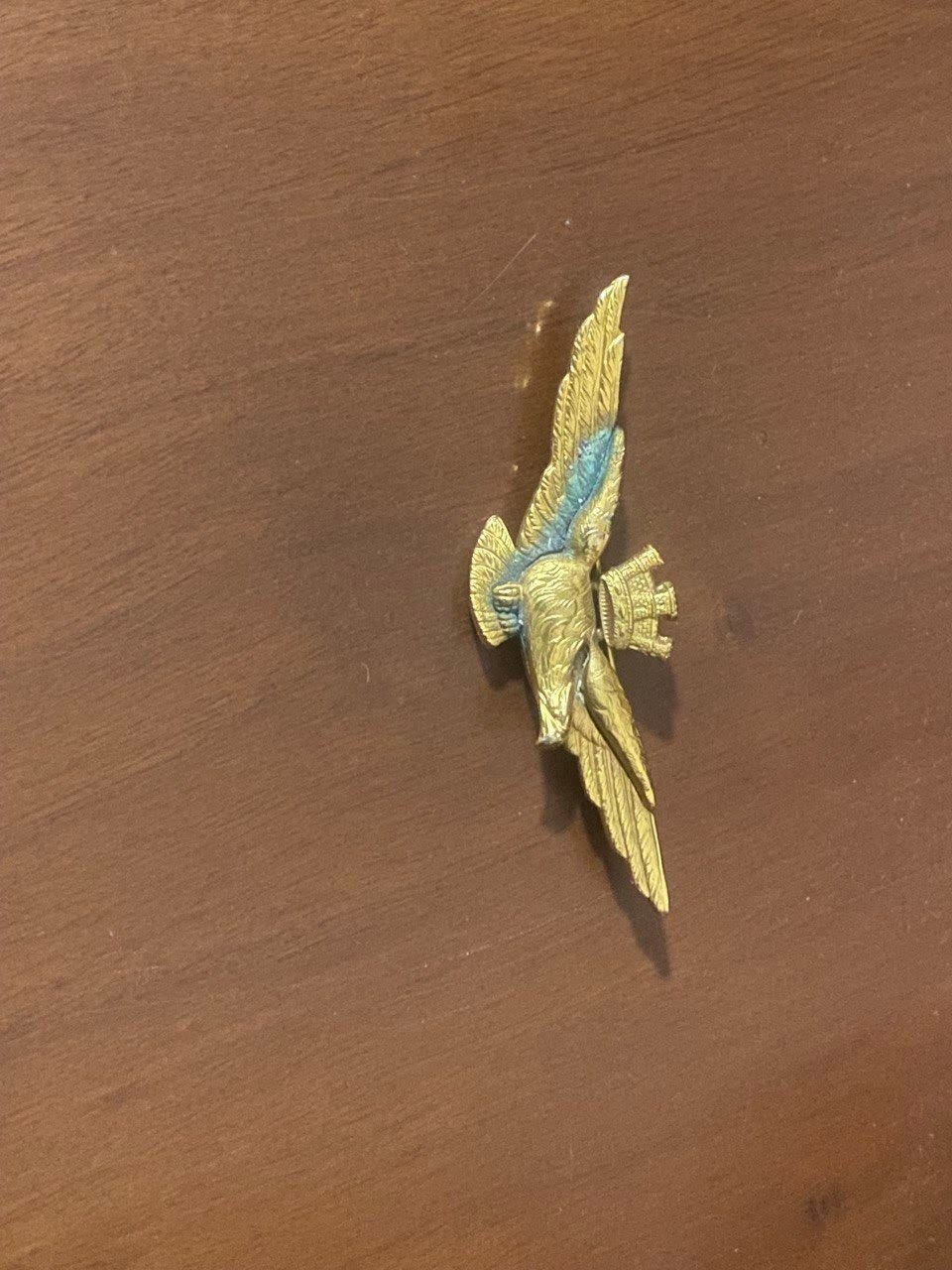
In Tempio there is a Via Bondestino Lutzu, spelt with an “o”, as in the newspapers of 1960. The family keeps the pilot's wings, the Lecce booklet, the clippings, his mother's letter and the notebook, with the rule copied by hand: before entering the circuit, call the tower. Pietruccia's poems were collected in a book for Christmas 1989 by the family of Giacomo, Pietro's brother, with their children. Pietro sent us a typescript of the poems, and that is where Tino's answer comes from, written by his mother.
That day, on the ship from Olbia, there was also a man from the Sannio: Raffaele Iannelli, born in Morcone, married in Gallura. This is how the two families of this site held hands at the hardest moment. The name Giacomo had chosen for his son did bring good luck that morning: not to Tino, but to the people below, in the houses along his path. Tino, writes Anna Demuru, “chose to give his good destiny to others”. From that day on it is also a story of the Iannellis.
Timeline: Buondestino “Tino” Lutzu
| When | What | How we know |
|---|---|---|
| 28 December 1935 | Buondestino “Tino” is born, son of Giacomo Lutzu and Pietruccia Mannoni | magazine (family memory) |
| November 1959 | joins the Air Force | 1960 newspaper; magazine |
| 29 June 1960 | pilot's wings, 34th course, Lecce | booklet (family papers) |
| 14 December 1960, 11.45 | the engine failure, the tower, “One moment, I can't”, the turn, the ejection too low | newspapers (image); poem; magazine |
| December 1960 | funeral in Tempio, paid for by the town | newspaper (image) |
| 29 December 1960 | his mother's letter | original letter |
| 8 August 1963 | his father Giacomo dies | Pietro's list |
| around 1980 | his mother writes “A mio figlio” | Pietruccia's poems |
| Christmas 1989 | the grandchildren give her the book of her poems | magazine |
Sources
- Descendants of Giovanni, son of Raffaele Arcangelo, with spouses and their parents
- “Timpiési minori e manni — Buondestino Lutzu”, edited by Anna Demuru, in the Tempio magazine “Lu Baddhittu” (year to be confirmed)
- Aviation Safety Network, Wikibase 158777: the crash of RF-84F MM52-7454 at Sommacampagna, 14 December 1960
- Buondestino Lutzu's flight notebook and his mother's letter, 29 December 1960
- La Stampa, 15 December 1960, p. 11: “He ejects from the jet in flight – the parachute fails to open and he dies”
- “Li mutti di Bisaia Mannona”: the poems in Gallurese by Pietruccia Mannoni, 1980-1981 (typescript, 117 pages)
- Booklet of the Lecce flying school, closing ceremony of the 34th course of reserve officer cadet pilots, 29 June 1960, with Buondestino Lutzu's papers
- Three newspaper clippings of December 1960 on the death of Second Lieutenant pilot Buondestino Lutzu
- Pietro Iannelli's charts of the Lutzu branch: AG1, AG1 bis, AG2 A-A, A-B, B, C, D
From the research of the Iannelli family. Published at the request of Pietro Iannelli.