Told by Pietro
Giovanni: the one who came back to stay
Morcone · Pittsford · Boston, 1903-1938
Pietro Iannelli · 26 November 2026
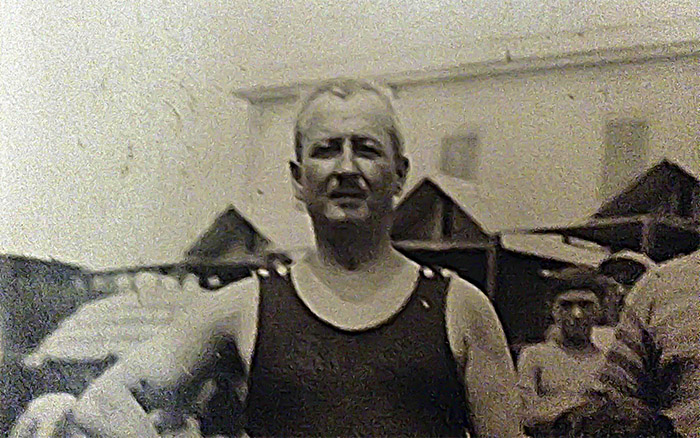
In 2013 I tried to tell something about my family on this site, in particular about the Iannelli branch, starting from the American adventure of my grandfather Giovanni, of which, however, we had only fragmentary news.
Recently I gained access to new sources, well documented enough to spur me to look more deeply into this part of his life, adding some news that is useful here about his brothers and sisters, with whom he shared that formidable experience.
My paternal great-grandparents Raffaele Arcangelo and Maria Cristina Rucci (AG1 and AG2) had 11 children: two died in infancy, seven left for the United States and six stayed there, raising families and giving rise to a large line of descendants.
On my blog I have already recalled what was called the “Great Emigration”, which between 1870 and 1915 is estimated to have taken 15-20 million of our fellow citizens out of Italy. The scale of the phenomenon even led the Italian State to set up a General Commissariat for Emigration: Morcone too made its contribution. Estimates based on different criteria give, for the first decade of the 1900s, a net migration of about 10%, roughly 1,000 people: whether all of them stayed abroad is harder to establish. Without emptying the town, as happened elsewhere, the phenomenon was still two to three times the national average. Morcone and the nearby towns were already known in the 1700s for working and dyeing wool. This activity was helped by the transhumance of the flocks and by the fast-flowing streams needed to run the fulling mills, water-driven machines that beat the wool so that it could be worked properly. Factors such as competition from the North and the decline of transhumance brought a slow but relentless crisis to the sector, which gradually, especially after the unification of Italy, also hit the dye works, because of competition from northern industry. The crisis of the wool trades left the population only farming, which also went through a severe crisis at the end of the 1800s, at the same time as a sharp rise in taxes under the House of Savoy: all this, together with the dream of so many young people of going to work in rich America, fuelled emigration and in particular its peak at the beginning of the twentieth century.
According to family memory, the first to seek his fortune in the USA was my grandfather Giovanni (AG2 and AG4), who then prepared the way for the rest of the family. In the records he seemed to appear only in 1909 in Boston; indeed, in 1913 he wrote to the parish priest of Morcone, Don Gaetano della Penna, a great friend of the family and Raffaele's “compare”, that he had been working there for four years.
Then I found the passenger list of the ship Algeria: we are in New York, on 19 June 1903.
At the immigration office a 19-year-old boy gives his trade as “Carpenter”; he comes from Morcone; he can read and write; he has 14 dollars in his pocket and paid for his ticket himself. In good health, and in the USA for the first time. On the same line it also says where he is going: “To Pittsford, Vermont, to his uncle Simone Rosato, post office box 177”. On the Algeria's list his name is the second, but hard to read, because it looked like Tannelli.
Moreover, his brother Nicola (AG2 and AG6), in his 1913 application for American citizenship, says he left Naples on 8 February 1904 at 16, although in fact he landed in New York in January 1905 from the ship Nord America: the passenger list shows that he declared himself a tailor, 17 years old, from Morcone. “Iannelli Nicola” is going to his brother Giovanni in Pittsford. About a year and a half after my grandfather.
The family account was not wrong; it was simply incomplete. The Algeria's list has everything we need.
But who was the uncle Giovanni was going to in 1903? He was Simone Rosato (AG1) of Morcone, born in 1854. He had already been to America twice: in 1896, on the same list as two fellow townsmen named Di Mella, and in 1899. Simone's birth record, dated 15 March 1854, San Marco quarter, says that his mother's name was Raffaela Iannelli. Raffaela is the baby girl whom Bernardino the shoemaker, who lived in the San Marco quarter, had brought to the mayor on 24 October 1827, signing the record in his own hand. She is the sister of Tommaso Aurelio, the blacksmith, grandfather of my grandfather Giovanni. Simone was therefore the cousin of Raffaele Arcangelo, “Raffaelone”, my paternal great-grandfather; the first door to America for the Iannellis had been opened by a branch of the family that descended from a daughter.
When Simone emigrated he was already married: on 19 August 1901 his wife Maria Narciso joined him. She landed in New York from the ship Lombardia. She was 45, with four children: Vittoria, Raffaela, Tommaso and Carmina. To the officer filling in the list Maria says where she is going: to Pittsford, to her husband Simone Rosato. The last in line, Carmina, is two years old and they call her Lena. Six weeks later the eldest son, Giovanni Rosato, 19, arrives too; he is going to his “Father Simone”. The “uncle”, however, does not stay with them for long. Simone dies in Pittsford on 30 April 1904, ten months after my grandfather Giovanni arrived. He is buried in the town cemetery under a gravestone written in Italian: born 15 March 1854, of Morcone, province of Benevento. I will certainly tell more about him in a future story.
After his uncle's death, Giovanni stays in Pittsford for some time, certainly at least until January 1905, in Simone's house with his aunt and cousins, showing, on this occasion too, his great sense of family.
In January 1905, as already mentioned, Nicola joined him. He is the first link in a chain: after him came Tommaso (AG2 and AG5), in New York on 4 June 1907 at 21, going to Nicola in Boston; Domenico (AG2 and AG7), in New York on 3 June 1910 at 17, going to Nicola in Boston; Achille (AG2 and AG9), in New York on 5 December 1911 at 17, going to Giovanni at 129 Webster Street in East Boston; and the sisters Marietta (AG2 and AG8), who left Naples on 18 January 1911 and landed in Boston on 1 February, eighteen, unmarried, paying for the journey herself, going to her brother Nicola in Maverick Street, and who gave as her relative left at home «Mother Rucci Cristina, Morcone»; and finally Immacolata (AG2 and AG11 and 11bis), who arrived on 13 May 1920, having just married Marco Rosato in Morcone on 31 January 1920. Mariannina (AG2 and AG3) and Pellegrina (AG2 and AG10) always stayed in Morcone. But that too is another story.
We still do not know exactly what my grandfather Giovanni did in the following years, but we find news of him again on 26 July 1907.
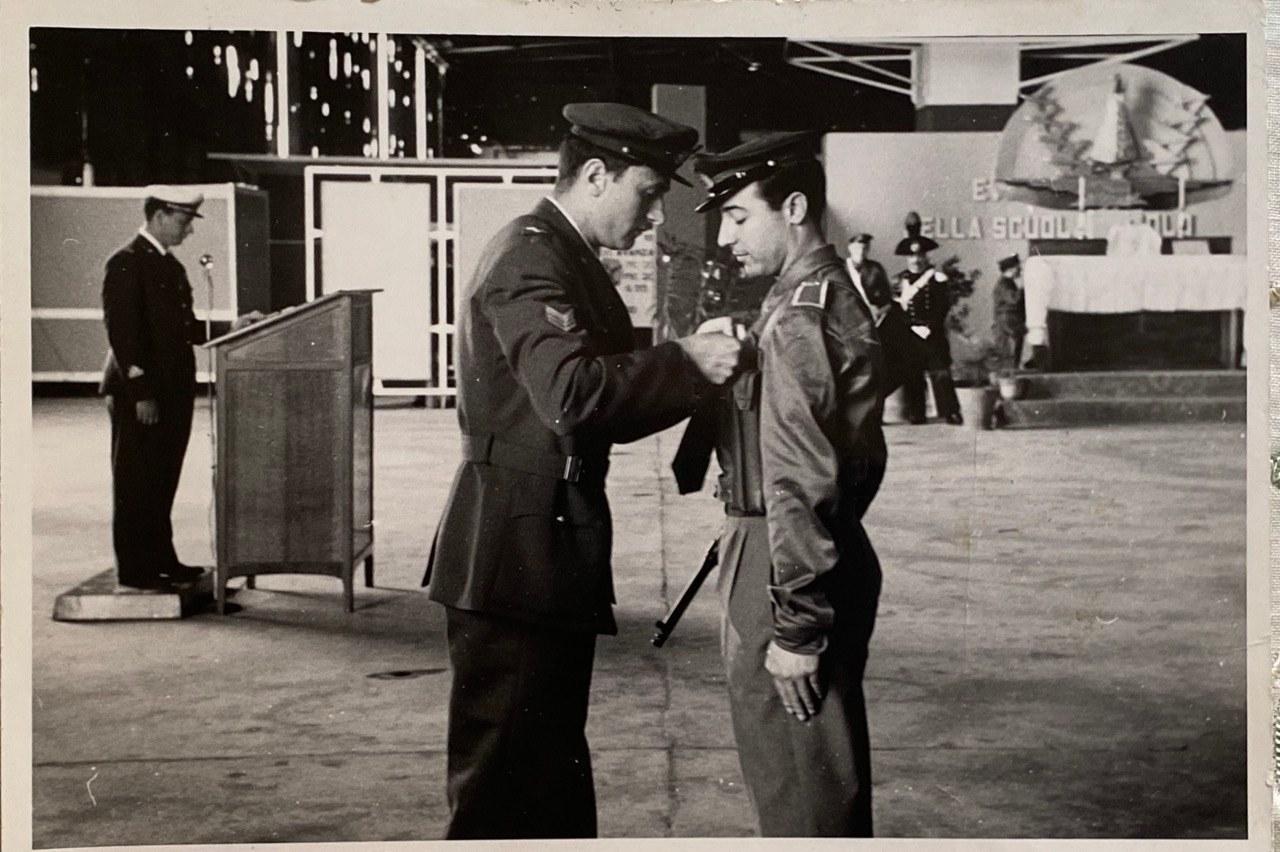
His military record tells us that on 7 July 1904 he was enlisted by proxy, because he was abroad, and automatically placed on unlimited leave.
But on 28 December of the same year he was called up, and the authorities recorded that he did not report because he was still abroad. He was given an extension until 30 April 1905; since he did not report by that date, he was charged and sentenced in absentia to one year in prison for desertion.
I imagine this happened to many young men of his age who had gone to seek their fortune in the United States; a quick search online confirms it.
As I said, emigration was on such a scale that, besides a dedicated Statistical Yearbook that recorded the data for 1876-1925, laws were passed to regulate permission to emigrate, such as the Crispi law of 1888, updated by a later measure in 1901. This one in particular required, before the age of 21, then the age of majority, the father's written consent and the mayor's clearance certifying identity, the absence of criminal charges and military status, all needed for the permit issued by the Prefect: those registered for military service from the age of 18 could emigrate but had to come back at 20 for the medical examination, or be declared draft evaders.
Giovanni, who certainly knew of the serious sentence of 1905 but also of the amnesty for the “deserters” of the classes of 1884-86 proclaimed on 4 July 1907, decided to return to Italy. He reported in Morcone on 26 July 1907, just 22 days after the law came into force, and, having reached the military district of Benevento on 31 July, was released without charge and moved from the class of 1884 to the class of 1886. Enlisted on 20 August 1907 in the 37th Infantry Regiment, he was discharged on 13 January 1908 with a certificate of good conduct, stating that he had served with loyalty and honour, issued on 13 January 1908. In fact the military record says that a service term of two years and three months was expected; instead he was discharged after less than a year: this may be closely connected with the fact that on 20 September 1907 his father died, leaving him fatherless and in practice head of the family, which could give access to specific benefits.
The sudden loss of his father in Naples must also have made the family's finances, probably already critical, collapse. The heirs were left with debts that were far from small. The need for an income large enough to settle the situation became more and more pressing.
On 27 January 1909, having by then fulfilled the military service that was compulsory in those years, my grandfather left Naples again for the USA on his second journey. On 9 February Giovanni landed in Boston from the Canopic: 24 years old, “cabinet maker”; he is going to his brother Nicola, who lives at 187 Maverick Street; asked whether he has been in the United States before, he answers yes. On his first journey, “Carpenter”: for us a builder's carpenter, much in demand in America on construction sites; hard work, often seasonal and not very specialised. Now “Cabinet maker”: a builder of furniture, working indoors in a factory or, more rarely, in an independent workshop; more specialised, perhaps better paid. It seems he had gone up a “grade” by the end of his first stay, before returning to Italy. And the furniture he made, still kept in Morcone, is proof of the quality of his work.
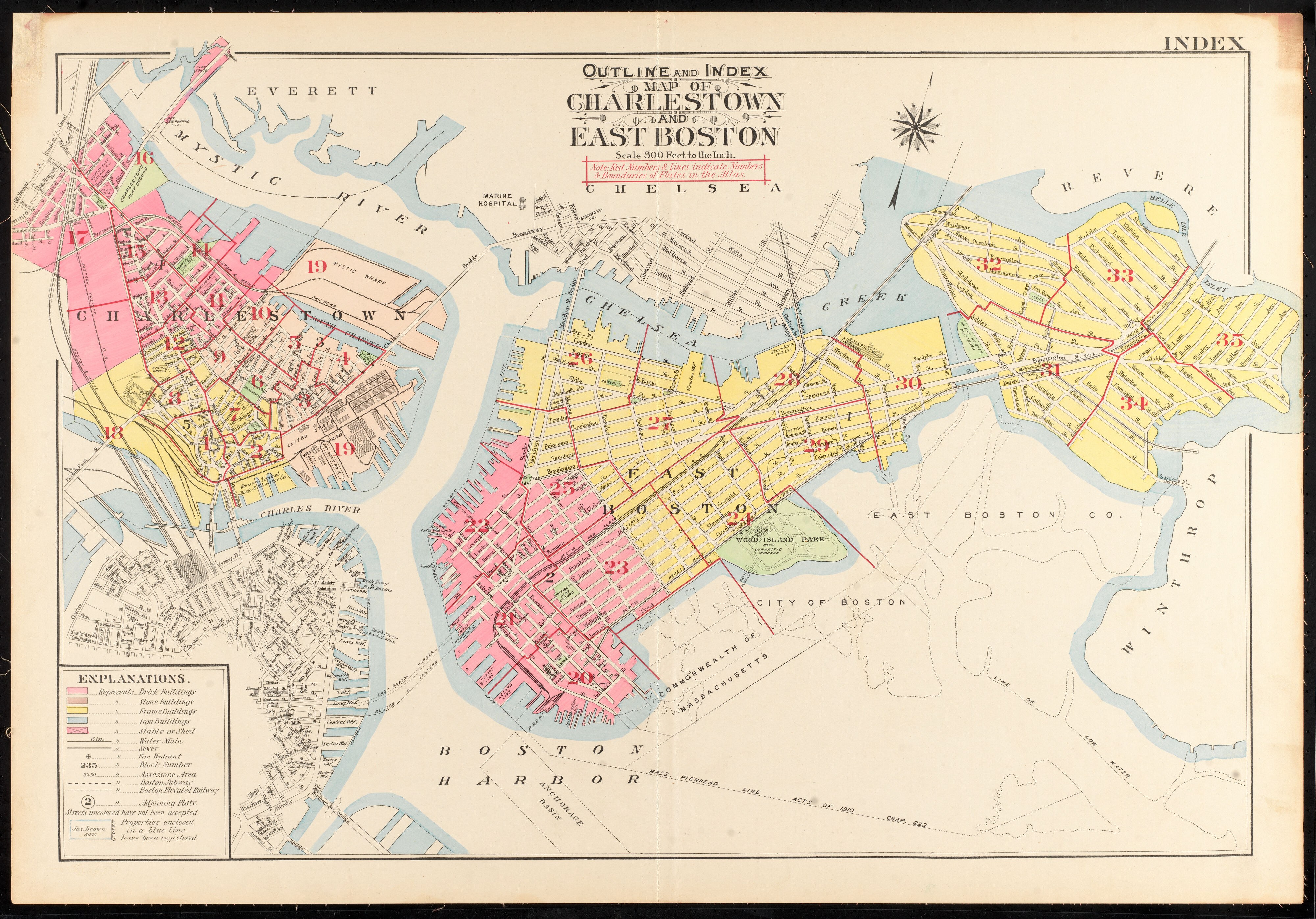
Meanwhile his cousin Giovanni Rosato, the eldest son of the Simone who had taken in my grandfather in 1903, left Pittsford and moved to East Boston, where he worked as a shoemaker; in November 1908 he married Ida Di Mella and went to live at 187 Maverick Street, in the same building as his Iannelli cousins. In the following years the other brothers too kept choosing to live in the same area, staying close to one another and never losing sight of their cousins either. (see the maps of Boston)
In Boston Giovanni, the eldest brother, becomes the head of the family for the brothers in America.
Until recently, what we knew about this period was based almost entirely on the letters between Giovanni and his mother Maria Cristina.
Of the 10 letters that uncle Mimì gave me as photocopies, 5 written by Giovanni to the parish priest, 4 written by the priest to Giovanni and one probably written by Cristina to her son Giovanni, I have at last made a complete transcription, which makes their content easier to read properly.
Reading these pages has had a very powerful emotional impact on me, already in the past and now with renewed strength. I was deeply struck by the affection and the strong spirit of this man, who takes on completely the needs of the family for which he feels full economic and moral responsibility. Giovanni's style is interesting too: very practical and essential, yet that of a man who does not give up clear expressions of his feelings, described with great frankness.
Still, the very gratifying emotion of being able to read these precious documents, so distant in time yet so current and alive, did not stop me from feeling a strong fear of violating the privacy of the people mentioned; it partly reassures me to know that Giovanni's letters were addressed to the parish priest, less of a relative to me, though a great friend and protector of theirs. Hence the decision to publish here only a few extracts that help tell the key facts. The complete transcription remains available to relatives who ask me for it through the “Contacts” form.
In 2013 I thought that my great-grandmother Cristina perhaps could neither read nor write. In southern Italy, in those years, that was true of almost everyone, especially women. However, this opinion, which also came from my first, difficult reading of the letters between Morcone and the USA, can now be revised in the light of a more careful look at the facts that have emerged from documents of various origins. I will come back to this in a future story, prompted for example by the fact that, from girlhood, Cristina's mother Aurora Lepore and her daughters Marietta and Immacolata could read and write.
In any case, Cristina and Raffaele's emigrant children, Giovanni in particular, certainly write to the parish priest, Don Gaetano Della Penna, who among other things had inspired the idea of going to work in “Rich America”. He reads or shows the letters to their mother and replies: «My dearest Giovanni and brothers… You sent me 1,905.50 lire under the following names: Iannelli Giovanni 824 lire, Iannelli Nicola 824 lire, Iannelli Tommaso 257.50 lire. Morcone, 12 January 1910». It is further proof that in January 1910 three brothers were already in America and that one of their main aims was to send their savings home to pay off the family's debts. Giovanni is 25, Tommaso 24, Nicola 22. The priest, who urges them not to forget that “unity is strength”, pays the creditors one by one and has them sign receipts in which he writes that they have «nothing more to do with the heirs of the late Signor Raffaele Iannelli». And he reminds them to write to their mother: «Keep your poor mother cheerful. The parish priest». Not all the letters were about remittances, as other remarks readable here and there in my transcriptions also suggest; the ones we have, all addressed to the priest and partly like account books, were perhaps kept precisely for this reason, and it is more than a guess: «My dear Giovannino, keep these letters well, they may be useful to you later. Giving you the Divine Blessing. Kissing you all, your mother». It is a firm piece of advice from his mother.
Following Giovanni's story further, we find that in December 1911 it is he who welcomes his younger brother Achille: as mentioned, he lands at 17 and says he is going to his brother Giovanni at 129 Webster Street, where as late as 1913 the Boston city directory lists three Iannellis in the same house: Giovanni, cabinet maker and head of the household, Nicola, tailor, boarding with him, and Tommaso, shoemaker. Achille, who starts working as a cabinet maker as soon as he arrives, “with me”, but then, more precisely, “under my direction”, as Giovanni writes to the priest on 12 December 1911, in 1917 works for the Kaplan company in Cambridge, which makes reproductions of eighteenth-century American colonial furniture, and in 1920 still lives on the same Webster Street, at number 146.
Then yet another letter arrives from home. His mother is seriously ill. «Yesterday I received letters from home, and with great sorrow I learned that mamma has been gravely ill… I would leave my place here, where I have worked for four years, always getting better». So Giovanni writes to the priest from East Boston on 10 March 1913. In the same letter Giovanni says he has sent another 1,060.90 lire by postal order to close one of the debts. Inside there are also 10 lire from Achille, «a gift for mamma». And he mourns his uncle Stanislao, whose death he has just learned of. These are the words of a man who has made it in America and must make a difficult, fundamental choice for his future.
His name is still in the Boston city directory of 1914; in 1915 it is gone, while Nicola stays at the same address.
Giovanni is certainly in Italy in 1915.
Italy is mobilising to enter the war; he may have heard of it and, to avoid being declared a deserter, this time perhaps with serious consequences, he comes back. And indeed, as his military record says, he is enlisted on 22 May 1915, called up for mobilisation and assigned to the 226th Territorial Militia Infantry Battalion. We do not know whether or where he fought: the territorial militias were made up of older soldiers assigned to guard the territory far from the front. Nor do we yet know when he was placed on provisional leave, up to the unlimited leave documented in 1930.
Tommaso too, who arrived in America in June 1907, before their father's death, stays there at least until 1914 and perhaps comes back for the same reasons as Giovanni and in a similar way; this is suggested by the fact that he too was moved from the military class of 1886 to that of 1887. But in 1921, after the end of the war, he leaves again for the United States. In March 1920 his name is on the list of the ship Cretic, bound for Boston. As his relative in Italy he gives «his brother Giovanni, in Morcone»; in America he is going «to his brother Achille, in East Boston». But the line is crossed out in pen: that time Tommaso is not recorded as landing. He will make it in 1921.
Four brothers and two sisters therefore stay in America and raise families in Boston, in the Bronx and in Connecticut, while Giovanni stays in Morcone with his mother and his sisters Mariannina and Pellegrina. Family memory recalls him carrying on and developing his parents' restaurant and lodging business, which his mother had struggled to keep going after she was widowed. In the Official Gazette of 1940, among the inns of Morcone, there is a «locanda Iannelli», with Giovanni Iannelli as its owner.
Cristina then dies in Morcone in 1918.
On 24 January 1920 Giovanni marries Linda Di Mella in Morcone, a shoemaker's daughter eleven years younger than him, who will also work beside him in the business. On 26 May 1921 their first son is born, Raffaele, my father; then, on 6 February 1923, Giovanni Domenico, whom everyone will call Mimì, and on 7 December 1924 Ennio. It will be Raffaele, many years later, who brings this branch of the family to Sardinia, where I live. Many other important stories, but not now.
Giovanni lived on the Corso, in the family house, perhaps built by him, where my cousin Albina, Mimì's daughter, still lives today. He dies in 1938, on 24 November. When the list of inns was published in 1940 he had already died, but, as we know, bureaucracy is in no hurry.
There is one aspect of this story that made me think.
Giovanni was the first Iannelli to go to America; he is the one who brought all the others over. But he was also the only one of the brothers who left to come back and stay. Had he remained in Boston, the family we know would not exist: no marriage to Linda, no Raffaele, Mimì and Ennio, no Sardinia. That cabinet maker who in 1913 wrote «I would leave my place here» chose his mother, his town, a house on the Corso. And from that choice, a hundred years later, here we are.
Stories have a title.
I chose one that seemed to me explicitly tied to a significant frame in my grandfather's life.
I could also have used a word I am not passionately fond of, but which seems to have been coined to describe what the brothers and sisters of the Iannelli family on both shores of the Atlantic had in common
Resilience
An honour and a source of inspiration for all of us, their descendants
Thank you for your precious example
From the research of the Iannelli family. Published at the request of Pietro Iannelli.